


 Dominic
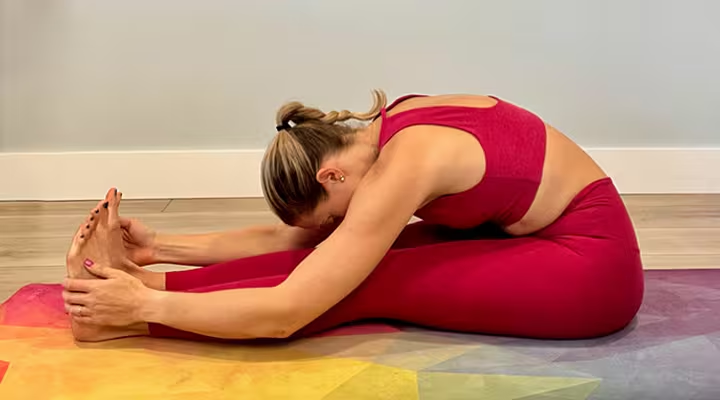
Movement injuries rarely come from a single dramatic moment. Most of the time, they build quietly through small imbalances, repeated strain, or patterns the body adapts to without complaint until it finally does. Yoga has shown me again and again that injury prevention is less about pushing harder and more about moving smarter. A consistent practice brings awareness to how the body actually works, not how I think it should work.
Yoga creates space to notice habits that go unchecked in other forms of training or daily life. Subtle asymmetries, restricted joints, and overused muscles reveal themselves on the mat without judgment. Over time, this awareness becomes the foundation for safer movement everywhere else. Injury prevention stops feeling like a separate task and starts becoming a natural outcome of how I move.
The Root Causes of Most Movement Injuries
Many common injuries trace back to the same underlying issues: limited mobility, poor stability, and lack of body awareness. Tight hips, weak stabilizing muscles, or restricted shoulders often force the body to compensate in ways that feel efficient at first. Those compensations gradually overload joints and connective tissues that were never meant to carry that burden alone.
Yoga exposes these compensations through slow, controlled movement and sustained positions. Poses that seem simple often reveal where strength is missing or where mobility has been sacrificed for control. By addressing these root causes rather than chasing symptoms, the practice becomes preventative rather than reactive. Injuries lose their mystery when the body’s patterns are clearly visible.
Building Body Awareness Before Pain Appears
Awareness is the quiet skill that prevents injuries long before discomfort shows up. Yoga trains attention in a way that few other practices do, encouraging me to feel subtle shifts in weight, tension, and breath. This awareness translates directly into safer movement off the mat.
When I can sense when a joint feels unstable or a muscle is overworking, I adjust instinctively instead of pushing through. Yoga teaches that discomfort carries information, not instructions to ignore it. Over time, the body learns to communicate earlier, making injuries easier to avoid rather than recover from.
Improving Joint Mobility Without Forcing Range
Restricted joints are a major contributor to movement injuries. When a joint cannot move freely, the surrounding areas compensate, often leading to strain or inflammation. Yoga improves joint mobility gradually through controlled movement and sustained stretches rather than aggressive forcing.
The emphasis on slow transitions and mindful positioning allows joints to explore their full range safely. This approach respects the limits of connective tissue, which adapts more slowly than muscle. Improved mobility distributes load evenly across joints, reducing wear and tear during everyday activities and athletic movements alike.
Strengthening Stabilizing Muscles That Protect Joints
Large muscles often get the spotlight in strength training, while smaller stabilizing muscles are overlooked. These stabilizers play a critical role in keeping joints aligned during movement. Yoga challenges these muscles constantly, especially in balancing poses and slow transitions.
Holding poses requires engagement from deep muscles around the hips, shoulders, knees, and spine. This engagement builds strength that feels subtle but becomes essential when unexpected movement occurs. Stable joints respond better under stress, making injuries less likely during sudden changes in direction or load.
Supporting Healthy Movement Patterns
Movement injuries often stem from repeating poor patterns over time. Yoga encourages symmetry and balanced effort, bringing attention to how both sides of the body function. Poses practiced on each side reveal differences that might otherwise go unnoticed.
By addressing these imbalances, yoga retrains movement patterns that support joint health. The body learns to distribute effort more evenly instead of relying on dominant muscles. Healthier patterns reduce repetitive strain, which is one of the most common sources of chronic injury.
Protecting the Spine Through Controlled Movement
The spine is involved in nearly every movement, making it particularly vulnerable to injury. Yoga promotes spinal health through controlled flexion, extension, rotation, and stabilization. These movements maintain mobility while reinforcing the muscles that support spinal alignment.
Rather than isolating the spine, yoga integrates it with breath and full-body movement. This integration teaches the spine to move as part of a coordinated system rather than absorbing force on its own. A resilient spine adapts better to daily demands and unexpected stresses.
Reducing Muscle Tension That Leads to Injury
Chronic muscle tension limits movement and alters joint mechanics. Tight muscles pull joints out of optimal alignment, increasing the risk of strain and overuse injuries. Yoga releases this tension through mindful stretching combined with breath awareness.
The nervous system plays a key role in how muscles hold tension. Yoga calms the nervous system, allowing muscles to relax without force. Reduced tension restores natural movement patterns, making it easier for the body to move efficiently and safely.
Enhancing Balance and Proprioception
Balance is more than staying upright on one foot. It involves the body’s ability to sense its position in space and respond quickly to changes. Yoga enhances proprioception by constantly challenging balance in both static and dynamic poses.
Improved balance reduces the risk of falls and sudden joint stress. The body becomes quicker at making micro-adjustments that prevent awkward landings or missteps. This heightened awareness carries over into sports, workouts, and daily activities.
Encouraging Controlled Transitions
Many injuries happen during transitions rather than static positions. Sudden movements, poor coordination, or lack of control can overload joints unexpectedly. Yoga places strong emphasis on how poses are entered and exited, not just the final shape.
These controlled transitions teach the body to move with intention and stability. Muscles engage before joints bear weight, reducing the chance of strain. Practicing smooth transitions builds habits that protect the body in real-world movement scenarios.
Supporting Tendon and Ligament Health
Tendons and ligaments adapt more slowly than muscles, making them susceptible to injury when load increases too quickly. Yoga applies gentle, sustained stress to these tissues, encouraging gradual strengthening without overstimulation.
Holding poses builds resilience in connective tissue while maintaining elasticity. This balance helps tendons and ligaments tolerate everyday demands and athletic stress more effectively. Healthier connective tissue provides a stronger safety net for joints.
Managing Fatigue and Recovery
Fatigue increases injury risk by reducing coordination and body awareness. Yoga supports recovery by promoting circulation, reducing muscular tension, and calming the nervous system. A well-recovered body responds more accurately to movement demands.
Incorporating yoga into a routine creates space for active recovery without complete inactivity. Movement remains gentle and purposeful, allowing the body to heal while staying mobile. Consistent recovery practices lower the likelihood of overuse injuries.
Addressing Overuse Before It Becomes Injury
Overuse injuries develop when the same tissues are stressed repeatedly without adequate recovery or variation. Yoga introduces diverse movement patterns that counterbalance repetitive activities. This variety gives overworked tissues a break while strengthening supporting structures.
The practice encourages listening to early signs of fatigue or irritation. Adjustments become proactive rather than reactive. Addressing overuse early prevents minor discomfort from turning into long-term injury.
Supporting Mental Focus and Injury Prevention
Mental distraction often plays a role in injuries, especially during complex or high-intensity movement. Yoga cultivates focus by anchoring attention to breath and sensation. This mental clarity improves coordination and reaction time.
Focused movement reduces careless mistakes that lead to injury. The mind stays present with the body instead of rushing ahead. Over time, this focus becomes second nature, enhancing safety across all forms of movement.
Adapting Practice to Individual Needs
No two bodies move the same way, and yoga respects that individuality. Modifications and variations allow practice to meet the body where it is rather than forcing it into idealized shapes. This adaptability is key to injury prevention.
Listening to personal limits builds trust between mind and body. Progress becomes sustainable instead of rushed. A practice that adapts to the body supports long-term health rather than short-term performance.
Integrating Yoga With Other Activities
Yoga works best as part of a balanced movement routine. It complements strength training, running, cycling, and everyday physical demands by addressing what those activities often miss. Mobility, stability, and awareness fill in the gaps that lead to injury.
Integration creates a more resilient body overall. Each activity supports the others rather than competing for recovery resources. Yoga becomes the connective tissue that holds a movement routine together.
Preventing Injury Through Consistency
Injury prevention is not about occasional intense sessions. Consistency matters more than intensity when it comes to protecting the body. Regular yoga practice maintains mobility, strength, and awareness before problems develop.
Small, frequent practices reinforce healthy patterns without overwhelming the system. The body responds to steady input better than sporadic effort. Over time, consistency builds resilience that feels effortless rather than forced.
Final Thoughts
Yoga has shown me that preventing injuries is less about avoiding movement and more about refining how movement happens. Through awareness, balance, strength, and recovery, the practice supports the body in ways that extend far beyond the mat. Injuries become less frequent not because movement stops, but because it becomes more intelligent.
A sustainable movement practice depends on listening, adapting, and respecting the body’s signals. Yoga provides the tools to do exactly that. Over time, injury prevention becomes an ongoing conversation with the body rather than a problem to fix after the fact.

GIPHY App Key not set. Please check settings